Starting around 2018, KitchenAid switched from a time tested design for the speed control link (which connects the speed selector lever to the controls at the back of the mixer) to a cost-reduced plastic link.
Here are a couple of photos showing the original production (top) and the newer part (bottom).
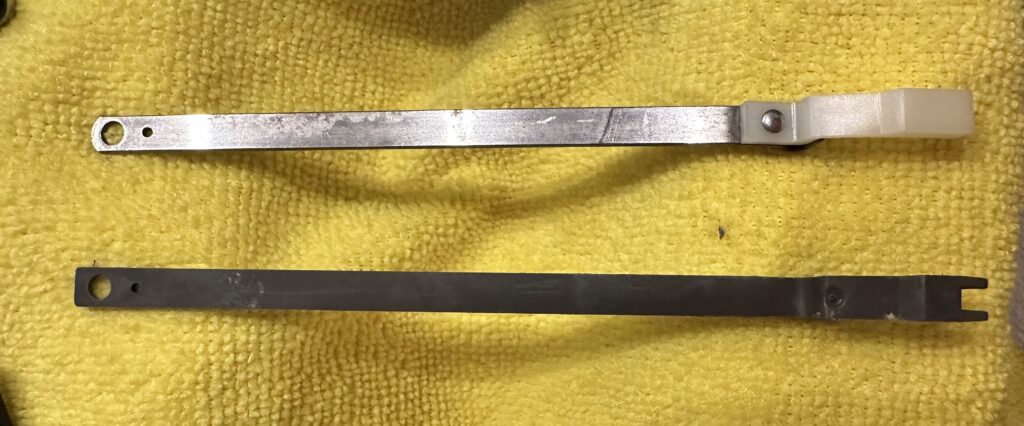
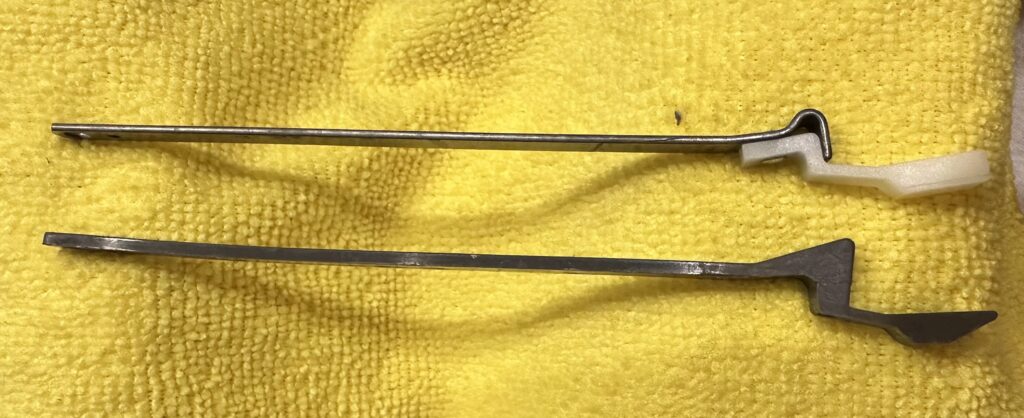
The newer design is prone to sudden failure, quite often melting due to the heat of the motor, or ultimately failing at the lever pivot from wear. Either of these failures will render the mixer inoperative until the link is replaced. Unfortunately, the service part (W11557271) is the same inferior part and will ultimately fail in the same fashion as the original.
Alas, the old production is all but unobtainable; the design isn’t being manufactured by the factory anymore, and the only source for the original part is a mixer which has one in it.
After a long period of investigation, design, prototyping, and testing, I’ve got a replica part which is a direct fit for the original and is designed to last for the life of the mixer. This was not as easy as it sounds; the original plastic cam (which among other things opens and closes the switch on the speed control plate) was injection-molded, which is a notoriously expensive undertaking and while it was viable if you’re producing millions of the things, it’s not very well suited to smaller production runs (such as an independent mixer repair shop).
The steel bar has special requirements as well: while the bar stock is pretty typical, it’s required to have a specific bend and because it’s so small, conventional industrial bending brakes can’t really handle it, so it requires custom tooling. (The right-angle bend at the end of the rod is crucial: the high-speed adjustment screw for the speed control plate rests on it, and plastic will wear.)
Enter the “SpeedLink”.
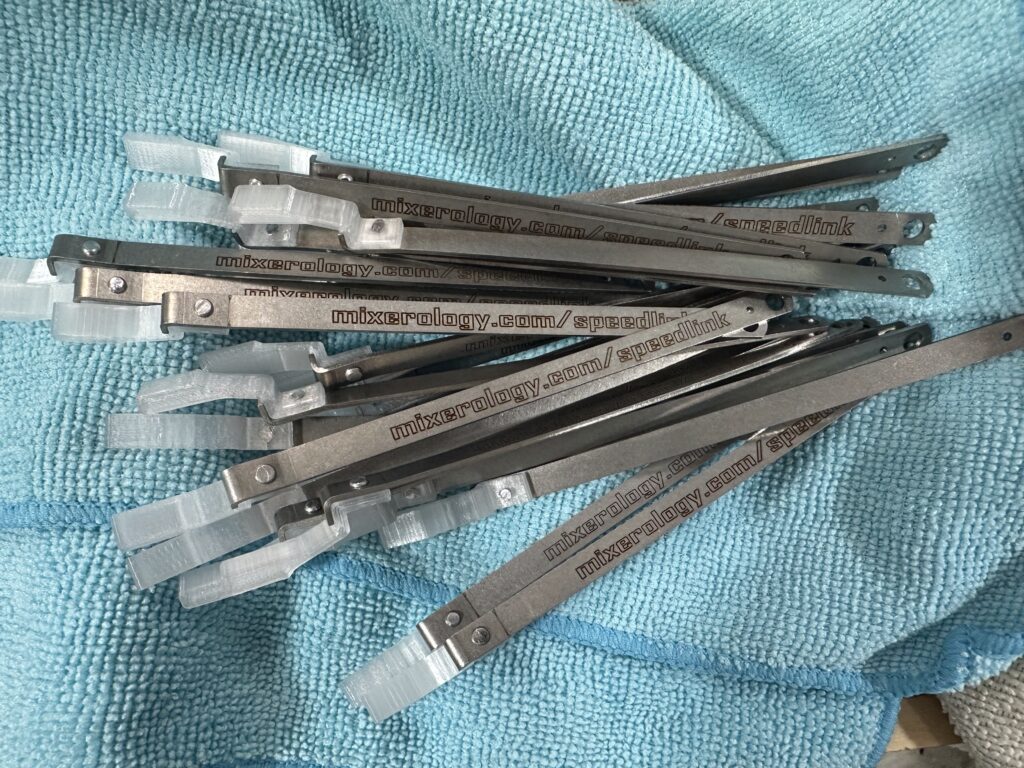
This is a replica of the original design, using modern materials and production techniques to keep the finished part affordable. (The original part was around US$15, and I’m very happy to have come quite close to that.)
The cam is 3D-printed using polycarbonate; this gives strength and a measure of heat resistance comparable to the original, while being feasible to produce in smaller quantities at a not-outrageous cost. (Did I mention how expensive injection molding is?) The bar is made of stainless steel for corrosion resistance.
Like the original, the SpeedLink is intended to last for the life of the mixer. I’m using them for repairs and refurbishment on mixers that arrive with the plastic link (failed or not), as well as a replacement on older machines in which the link has been damaged (usually in a fall). I will replace a SpeedLink that fails in service (for any reason other damage resulting from a mixer fall or other impact) at no charge.